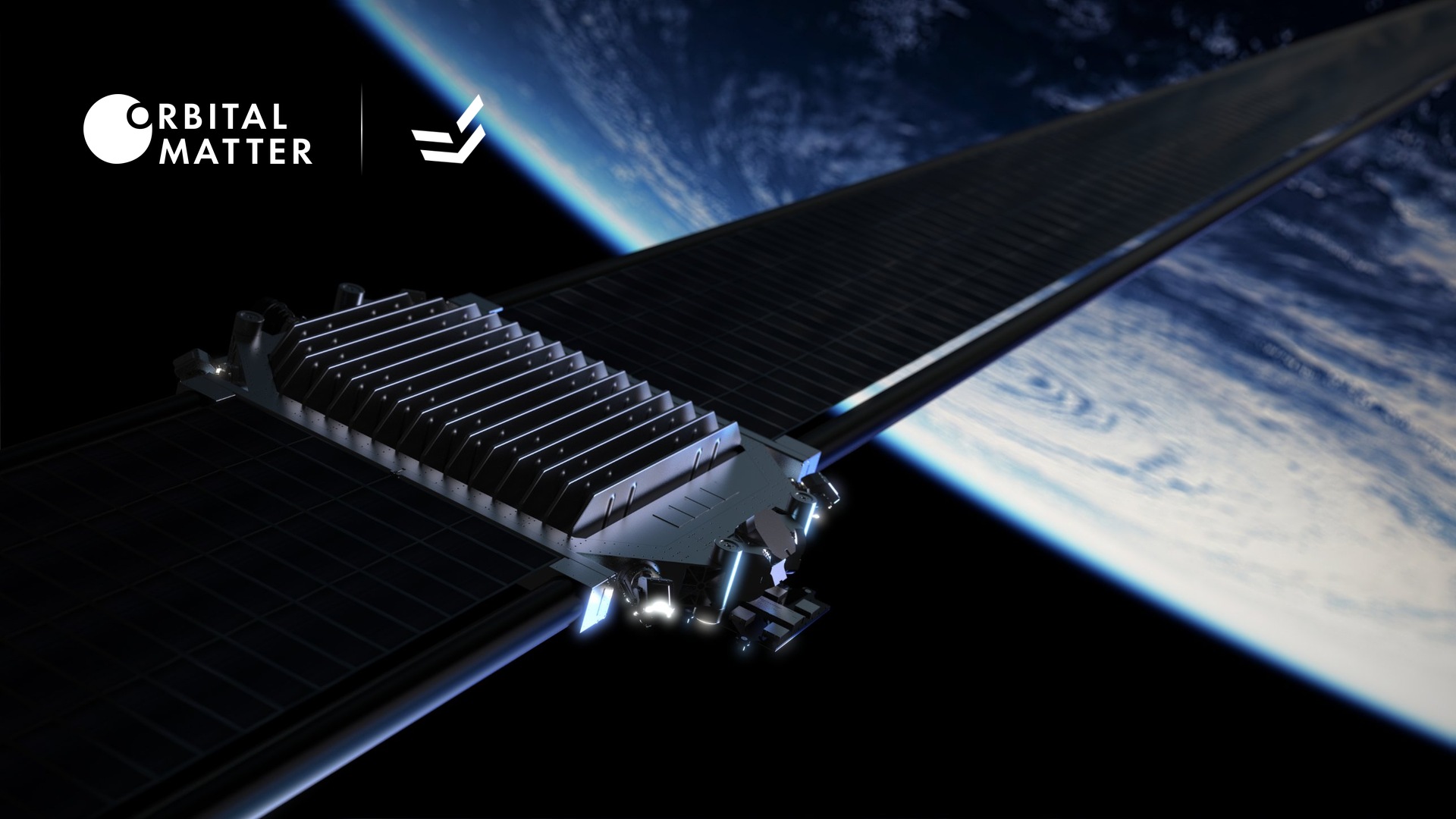
Warsaw / Sofia, 4 November 2026. Orbital Matter, an in-space manufacturing company, and EnduroSat, a space infrastructure builder, today confirmed that a printer aboard the Replicator 2 satellite 3D printed a clean, continuous boom of 32.5 cm length in the open vacuum of space. Replicator 2, an EnduroSat 8U CubeSat carrying four Orbital Matter printers, is the companies’ second joint flight. Building on the result, Orbital Matter and EnduroSat plan to fly a 5 kW pilot solar array in 2028, the first step toward proven 10 to 100 kW arrays that the two companies can offer to orbital data center operators.
Power is the limit on the next generation of satellites
Starship-class launch makes satellites roughly ten times bigger, and their power needs grow with them, from up to 10 kW today to 100 kW and more per satellite, driven by AI payloads and orbital data centers. Solar blankets scale easily; unfolding them does not. Affordable fold-out arrays run out of options around 5 kW, and the few flight-proven arrays above that are heavy, expensive and built for flagship missions. As satellites grow, the array becomes the dominant system, measured by deployed span, and the deployment mechanism becomes the hard limit on how much power a satellite can generate.
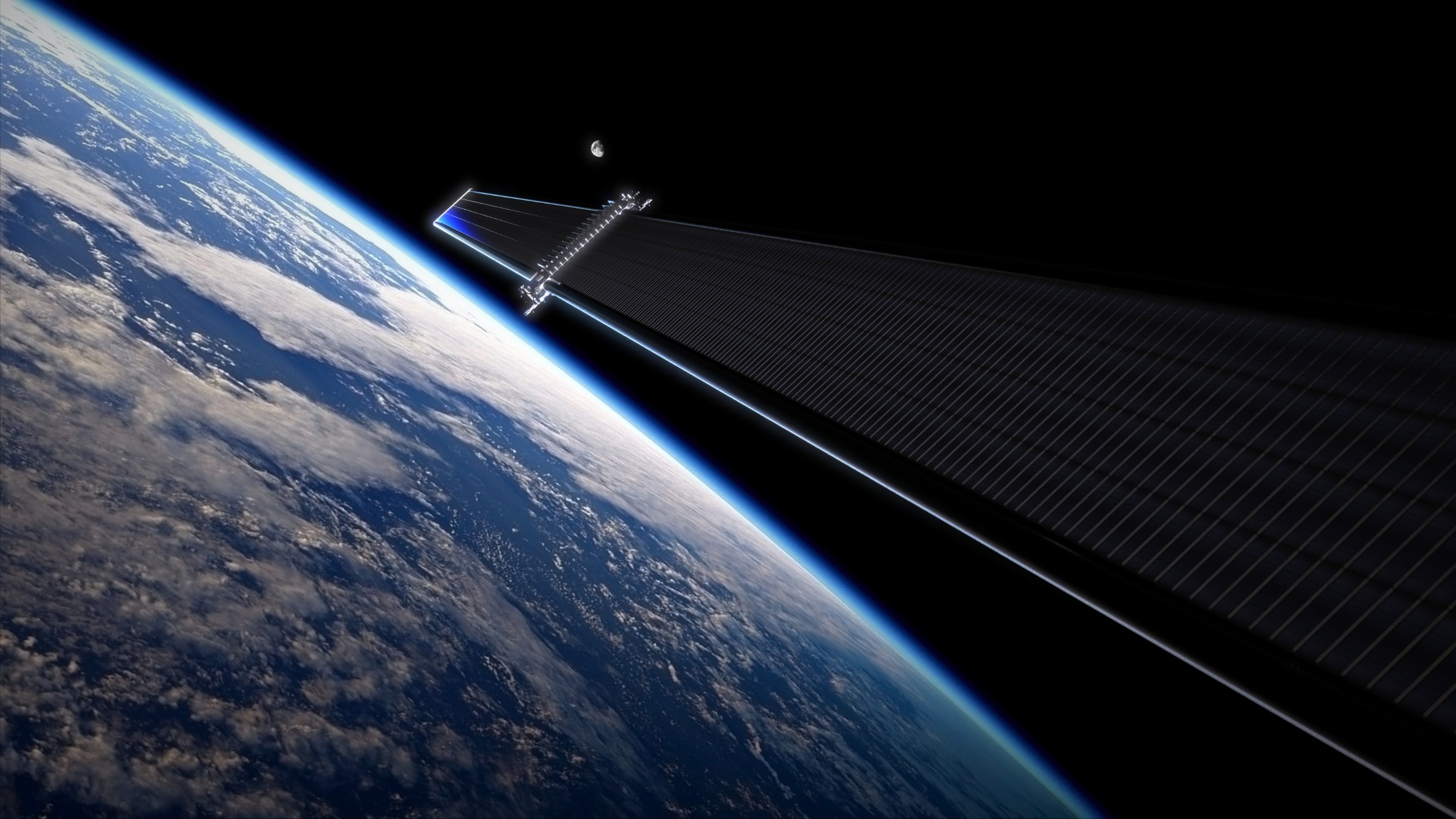
Orbital Matter’s answer is to build the boom that unfolds the array directly in orbit. A 1U-size printer extrudes liquid photopolymer resin layer by layer and UV-cures it immediately into a rigid cylindrical boom. As the boom grows, it pushes out and holds a folded silicon solar blanket. A longer boom needs only more raw material, stored as liquid in a compact tank, not a larger mechanism. Packaging efficiency goes up and the span limit disappears, which is what opens the way to 100 kW-plus wings and, eventually, megawatt arrays.
Printing the structure where it is used
Replicator 2 has validated the step the whole roadmap rests on: printing a continuous, rigid structure in the open vacuum of space, outside the walls of a station or capsule. With that proven, the span of a solar array becomes a question of feedstock rather than mechanism design.
Two joint flights have taken the work from a 3U CubeSat in 2024 to an 8U satellite hosting four printers in 2026. Building on EnduroSat’s standardized satellite platforms, Orbital Matter puts its engineering into the printing process rather than the spacecraft, accelerating the path to proving its technology.
From demonstration to a product customers can order
The next milestone is a product. In 2028 the two companies will fly a 5 kW pilot wing, printed and deployed in orbit on EnduroSat infrastructure. Success means an array EnduroSat can offer to customers such as orbital data center operators.
From there, the roadmap scales with EnduroSat’s larger platforms: kilowatt-class pilots first, then 100 kW-plus arrays on FRAME Max for constellations and orbital data centers. For customers, that means power that grows with the satellite beyond the limits of foldable solar arrays, delivered through the same standard bus, integration, launch and operations model.
Beyond solar arrays, the same process can build radiators, antennas and station structures in any orbit. Orbital Matter already holds ESA contracts for three in-orbit demonstration missions and a lunar construction proof of concept.
“Our goal is to build in orbit what could never be launched. Printing a boom in the vacuum of space proves the step everything else rests on: we can build structures in orbit instead of designing them for launch. With EnduroSat we now turn that into a product, starting with a 5 kW solar array in 2028 and scaling to 100 kW-plus arrays for orbital data center customers. Building in orbit is the most efficient way to reach the scale these platforms need. The deployment system is just a small 3D printer and a tank of liquid raw material, so almost everything we launch is solar blanket, which makes a very power-dense package. And because the boom that deploys and carries the array is printed in orbit, it can grow far larger than anything that has to unfold.” Jakub Stojek, CEO, Orbital Matter
“Orbital data centers and AI compute in orbit will require hundreds of kW per satellite. Building the array’s structure in orbit opens up a whole new realm outside of today’s deployable structures limit. This first flight is an important milestone in our partnership with Orbital Matter, which will scale to 100+ kW arrays in the next few years at a fraction of the current market USD/W.” Victor Danchev, CTO, EnduroSat
About Orbital Matter
Orbital Matter is a space construction company and the first to 3D print in the open vacuum of space. Its compact 3D printer builds the booms that deploy very thin solar blankets directly in orbit, removing the span limit of folded, deployable arrays and opening the way to megawatt-class power for orbital data centers and AI constellations. Solar arrays are the first product on Orbital Matter’s roadmap; the same process can build radiators, antennas and large structures in any orbit, and eventually infrastructure on the Moon and Mars. www.orbitalmatter.com
About EnduroSat
EnduroSat is a space infrastructure builder that engineers, manufactures, and operates high-performance satellites, making space universally accessible for commercial and institutional customers across the globe. EnduroSat delivers end-to-end satellite missions, from mission design and payload integration to launch and in-orbit operations, through a fixed-cost, constellation-as-a-service model. EnduroSat serves 450 customers globally and employs more than 400 space professionals across 7 countries on 3 continents. www.endurosat.com