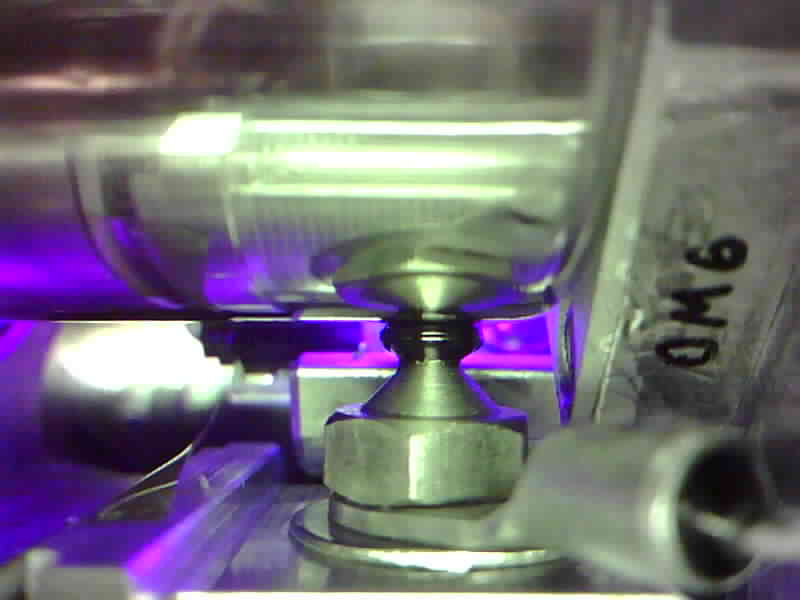
Orbital Matter is the first company to 3D print in the open vacuum of space. On our Replicator 2 mission, launched on 7 July 2026, one of the four printers on board extruded resin and cured it into solid structure while flying in low Earth orbit, exposed to vacuum, extreme temperature swings and microgravity.
Every earlier demonstration of in-space manufacturing was carried out inside the pressurized, temperature-controlled cabin of the International Space Station. Ours was done outside, in the real environment where large space structures will actually be built. We are getting there in deliberate stages, and this first print is one of them.
A staged path to a solar array
Building a solar array in orbit is not a single event, it is a sequence. First you bring the satellite to life and commission each system. Then you prove the core process, that the printer can extrude and cure material in the open space environment. Then you refine that process and scale it up to full-length booms. Finally you use those booms to deploy the solar array folded on board.
This first print sits at the start of that sequence, and it clears the biggest unknown of all. Printing in space is nothing like printing on a bench on Earth. There is no gravity to settle the material, no air, and the temperature outside a spacecraft swings far beyond anything a workshop ever sees. Confirming that our printer extrudes and cures in those conditions is the foundation everything else is built on, and we now have it.
What the camera saw
The best record of the print is the footage itself, filmed by the printer’s onboard camera through the whole run.
The first footage of 3D printing in open space, filmed by the printer’s onboard inspection camera on the Replicator 2 mission.
In the video you can watch the process happen in front of you. The nozzle sits at the centre of the frame. Resin is pushed steadily out of it, and as the ultraviolet curing light switches on it casts a distinct violet glow across the fresh material. Layer by layer, resin is laid down and locked solid, and a piece of structure grows in view that did not exist moments before. This is the first footage of 3D printing taking place in open space, and it is a genuinely striking thing to watch: a small factory, running by itself, building hardware while it orbits the Earth.
Cameras and vision, built in house
Those cameras are our own design. There is one inspection camera per printer, four in total, and all four are working well on orbit.
They are not only there to produce a nice video. The same camera feed drives an in-house image-recognition system that watches the print as it happens and interprets what the material is doing, automatically, without a person in the loop. Most of that work never appears in the raw footage, but it is one of the most important parts of the system. It is how each printer understands its own print, and it is how we keep quality consistent as we move to larger structures.
What comes next
With the core process proven in orbit, our focus now moves to the next phase: scaling the print up to the full-length booms that will deploy the solar array stowed on board. That is the milestone we are working toward, and it is why this first print matters. It turns building large structures in orbit from an idea into something we have started doing.
We will keep sharing the mission as it unfolds.