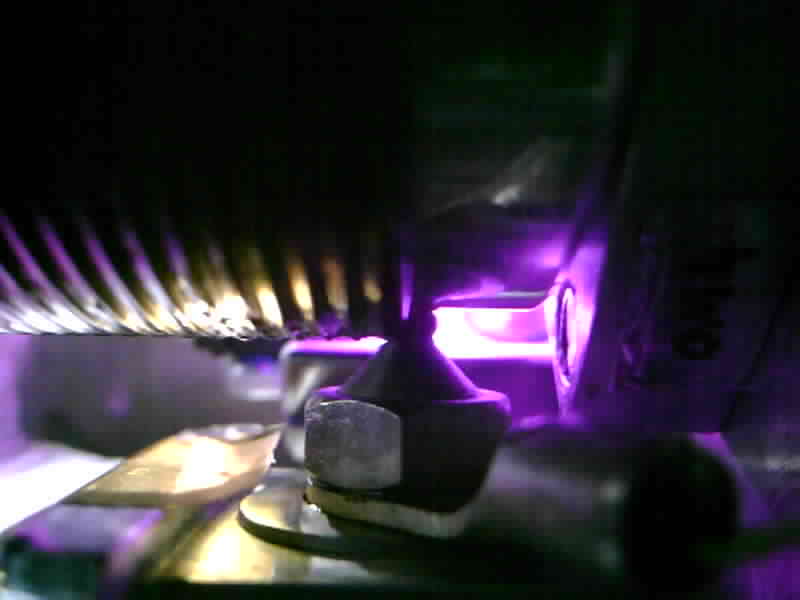
On 21 October 2026, the second printer aboard our Replicator 2 satellite 3D printed a boom in the open vacuum of space. The print ran for around 30 minutes and produced a continuous boom with clean bonding between layers, extending 30 cm out from the satellite. It is our second successful print in orbit, following the first on 12 August, and the first boom we have produced in space.
The on-orbit print explained, with footage from the Replicator 2 mission.
Booms are the structural element of our solar arrays. Printed in orbit, they unfold a stowed solar array and serve as its support structure once it is deployed. Printing a boom in space is the step between proving the process and deploying an array.
The mission so far
Replicator 2 launched on 7 July 2026 with four of our printers on board. After launch we brought the satellite online and commissioned each of its systems. On 12 August, the first printer extruded resin and cured it into solid structure, the first 3D print made in the open vacuum of space. That print confirmed that the core process works under vacuum, extreme temperature swings and microgravity.
The second print followed after more than three months in orbit.
From the first print to the second

Between the two prints, our team spent two months iterating on the process. We analyzed the data from the first print, refined the printing parameters and improved the printer firmware. The second print ran with those changes and produced a clean, continuous boom.
The boom is hollow. The printer builds it in a continuous spiral, which allows long booms to be printed without interruption while keeping them light and stiff.
Monitored by computer vision
As with the first print, the run was recorded by the printer’s onboard inspection camera, one of four on the satellite, all designed in house. The camera feed drives our image-recognition system, which controlled the print and verified the material as it was produced. This is how each printer checks its own output, and it becomes more important as the structures we print get longer.
What comes next
With the second print, 3D printing on Replicator 2 is accomplished. We are preparing a full mission report with detailed results from both prints, which we will publish in the coming days. You can also read the story on TechCrunch.
The next milestone is to build a 5 kW solar array, using two printers to deploy a thin solar blanket stowed between them. The mission is planned for 2028 in partnership with EnduroSat. Visit Payload to learn more about this mission.